
It has been more than 25 years since Bart McNeil and Alan Beaman met at Stateville Correctional Center in Joliet.
The two had more in common than convictions in separate murder cases in McLean County. Both would spend their years in prison fighting a wrongful conviction. McNeil is serving 99 years in the suffocation death of his 3-year-old daughter and Beaman has been exonerated of killing his former girlfriend, Jennifer Lockmiller.
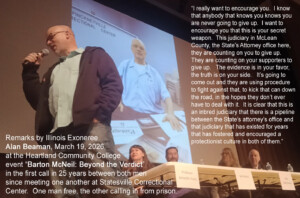
On March 19, the two met via an internet connection set up for a forum at Heartland Community College in Normal that examined McNeil’s case. Beaman traveled from his home in Rockford to speak with McNeil, who is housed at Graham Correctional Center.
Beaman, who was released from prison in 2008 after the Illinois Supreme Court reversed his conviction, offered a powerful message to McNeil:
“”I really want to encourage you. I know that anybody who knows you knows you are never going to give up. I was to encourage you that this is your secret weapon.”
Beaman knows something about the secret weapon of support. Both men have a strong network of support outside the prison walls. Beaman’s family, friends and a tenacious legal team worked tirelessly to secure his freedom after 13 years behind bars and the successful resolution of a lawsuit that resulted in a $5.4 million settlement for Beaman. The efforts to bring new, exculpatory evide3nce in McNeil’s care into the courtroom are led by an equally dedicated legal team and Bart’s cousin, Chris Ross, who devotes much of his time to McNeil’s case.
As a reporter, I covered both cases. I read every court filing and attended hearings in local and state courts. I can say the same about the Jamie Snow, Don Whalen and Anthony Grampas cases, three other McLean County murder cases where serious questions linger about the defendants’ innocence. At the end of the day, court rulings that deny defendants the opportunity to have new evidence and information heard in court does nothing to quell the unsettling doubts.
Connect with me